

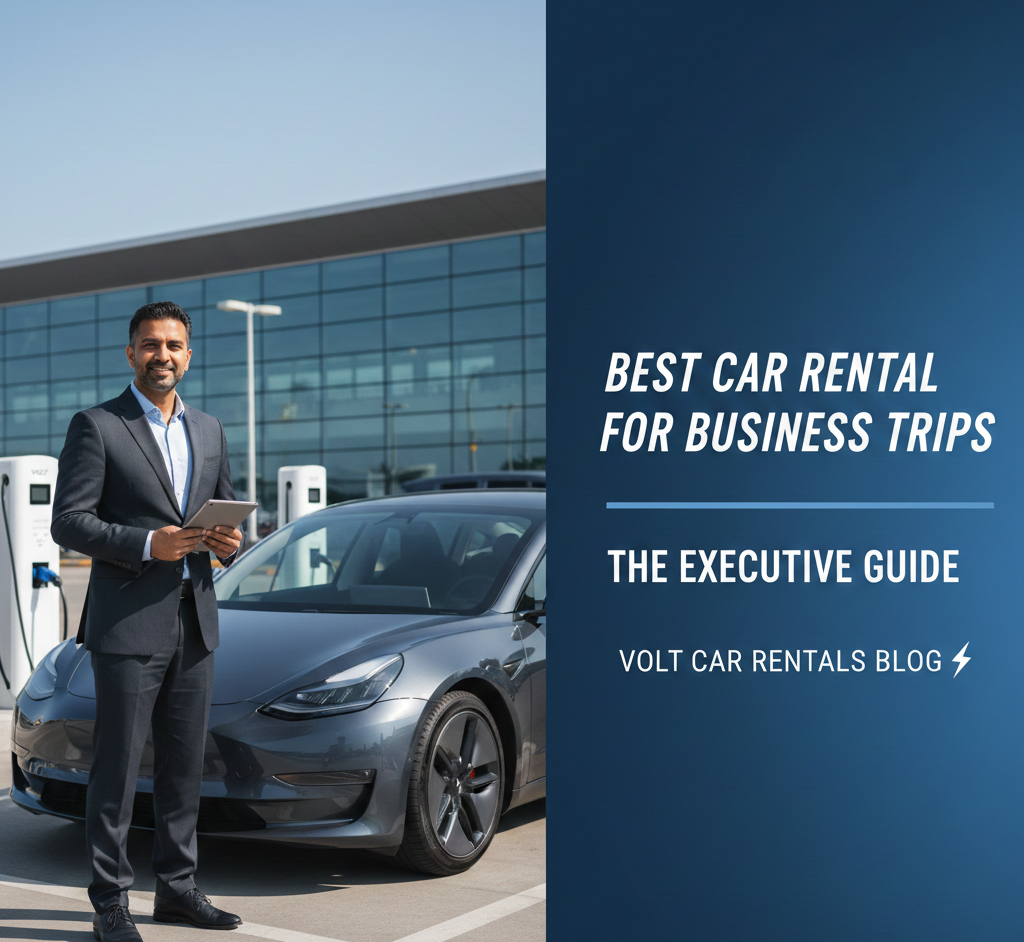
In 2026, business travel has shifted toward “bleisure” (business + leisure) and high-efficiency regional trips. Relying on rideshares can be unpredictable, and using a personal vehicle often leads to “Duty of Care” risks for employers.
Renting for business offers three primary advantages:
- Reliability: Modern rental fleets (like those at Volt) feature vehicles under two years old, minimizing the risk of mechanical failure.
- Professional Image: Arriving at a client’s office in a sleek, late-model sedan or a premium EV like a Tesla Model 3 sends a message of success and attention to detail.
- Cost Control: Corporate rates and centralized billing make expense reporting significantly easier than tracking individual taxi receipts or mileage reimbursements.
2. Choosing the Best Vehicle Category for Your Mission
The “best” car depends entirely on the nature of your trip. Here is how to categorize your needs:
The Executive Choice: Premium Sedans & EVs
If you are meeting high-stakes clients or attending a prestigious conference, a premium vehicle is non-negotiable.
- Top 2026 Picks: Tesla Model 3 (Highland), BMW i4, or a Mercedes-Benz C-Class.
- Why: These cars offer “Advanced Comfort” seating and quiet cabins, allowing you to take hands-free calls in a professional environment.
The Team Player: SUVs & Minivans
Traveling with a team or carrying bulky presentation equipment? You need volume without sacrificing style.
- Top 2026 Picks: Toyota RAV4 Hybrid, Volvo EX90, or the Kia EV9.
- Why: These offer ample legroom for colleagues in the back and massive cargo space for trade show banners or prototypes.
The Urban Commuter: Compact & Economy
If your trip involves navigating dense city centers like London, New York, or Singapore, smaller is better.
- Top 2026 Picks: Mini Cooper SE or a Volkswagen ID.3.
- Why: Easy parking in tight corporate garages and better maneuverability in traffic.
3. The 2026 Shift: Why Electric is the Best for Business
Sustainability is no longer a “perk”—it is a corporate mandate. Most global firms now have ESG (Environmental, Social, and Governance) goals that influence travel policies.
Renting an EV for your business trip provides:
- Tax Incentives: Many regions offer lower tolls or congestion charge exemptions for electric rentals.
- Productivity: Modern EVs act as mobile offices with high-speed Wi-Fi hotspots and integrated Zoom/Microsoft Teams capabilities in the infotainment system.
- The “Volt” Advantage: Choosing a rental provider that specializes in “Volts” or EVs ensures you have access to a dedicated charging network, so you never have to waste time at a gas station before a meeting.
4. Productivity Hacks for the Business Traveler
To get the most out of your rental, follow these 2026 “Power User” tips:
Use Contactless Pick-up
Time is money. Avoid the rental counter entirely. Choose services that allow for digital key technology, where you can unlock your car via a smartphone app and drive away immediately upon landing.
Leverage Loyalty Programs
Sign up for corporate loyalty programs. In 2026, status isn’t just about points; it’s about guaranteed upgrades and “skip-the-line” privileges. If you are a frequent traveler, sticking with one brand (like Volt) can lead to significant annual savings.
The “Empty Tank” Strategy
Never prepay for fuel or charging at the rental desk. It is almost always more cost-effective to return the car with a full charge or tank yourself. Use apps like Waze or PlugShare to find the fastest charging or refueling point within 5 miles of the airport.
5. Safety and “Duty of Care”
For fleet managers, the “best” car rental is the safest one. In 2026, ensure your rental includes:
- Level 2 Autonomy: Features like adaptive cruise control and lane-keeping assist reduce driver fatigue on long intercity hauls.
- Telematics: Integrated GPS and emergency assistance (like OnStar or Tesla’s roadside support) ensure that if an employee has a breakdown, they are never truly alone.

Leave a Reply